I want to share some thoughts from the bottom of my heart.
Not kindergarteners who mix up letters or can’t match first sounds.
Not first graders who need more practice.
Those are challenges we know how to address.
It’s the calls from parents of sixth-grade students in yeshivot and day schools.
Their children are struggling — academically, emotionally, sometimes behaviorally.
These children don’t want help.
They don’t want to look at a single Hebrew word. They gave up.
Some are weeks away from becoming bar mitzvah boys and can barely read Hebrew.
And the hardest part? Many of these children have already given up on themselves. My pain point isn’t that children struggle. It’s that we often wait far too long to intervene.
This Isn’t Just Academic
By the time students reach upper elementary or middle school, the struggle is rarely limited to reading alone. Children — and their families — are often suffering deeply. Some students are receiving implicit or explicit messages:
“You can’t do this.”
“You’re not trying hard enough.”
“Maybe this isn’t the right place for you.”
In some cases, families feel they have no choice but to lower expectations and make the pressure lighter. Some family try to do more of what didn’t work the first time, just adding salt to the wound. These children could achieve more. They simply weren’t given the tools, instruction, or timing they needed to succeed.
The Research Has Been Clear for Decades
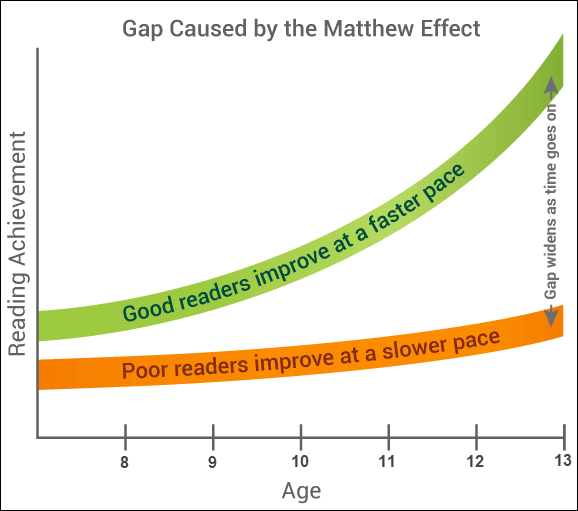
This isn’t a mystery. Research on early literacy has been consistent for years. One of the most well-known findings is the Matthew Effect in reading:
Children who learn to read early continue to improve.
Children who struggle early fall further and further behind.
Strong readers read more, gain vocabulary faster, and build fluency naturally.
Struggling readers read less, miss learning opportunities, and accumulate gaps — not just in reading, but across every subject that depends on reading.
The gap doesn’t stay the same. It widens. This applies just as powerfully to Hebrew reading and Kriah as it does to English.
The Earlier We Catch the Problem, the Easier It Is to Fix
Research has shown something both sobering and motivating:
Children who struggle with reading early rarely “catch up” on their own —
but early, well-designed intervention can dramatically change outcomes.
This is the key point I wish more people understood: The earlier we identify a Kriah difficulty, the easier it is to fix.
Waiting won’t help the problem resolve on its own. It makes it harder — academically and emotionally.
By the time children are older, they’re not just learning to read Hebrew.
They’re trying to make up for years of missed vocabulary, background knowledge, and fluency — while also carrying a damaged self-image.
Everyone Can Learn to Read — But Fluency Is Time-Sensitive
Yes — people can learn to read at any age. But achieving fluent, automatic reading becomes much harder after the early elementary years, especially after third grade.
At that point, school shifts from learning to read to reading to learn — in limudei kodesh, tefillah, and text-based learning. If Kriah isn’t fluent, everything else becomes a struggle.
Some children push through with enormous effort. Others shut down completely. Both outcomes come at a cost — and both are preventable if we give children the help they need right away.
The Emotional Cost of Waiting Is Enormous
When children struggle for years without the right support, something deeper happens. They stop seeing reading as a skill. They start seeing it as a personal failure.
“I’m bad at reading.”
“I’m not smart.”
“I hate Hebrew.”
So even when we finally offer an effective solution, they may resist — not because the solution doesn’t work, but because their confidence has already been eroded.
This is why early Kriah intervention isn’t just academic. It’s emotional. It’s cultural. It’s foundational. It’s a doorway to access and belonging.
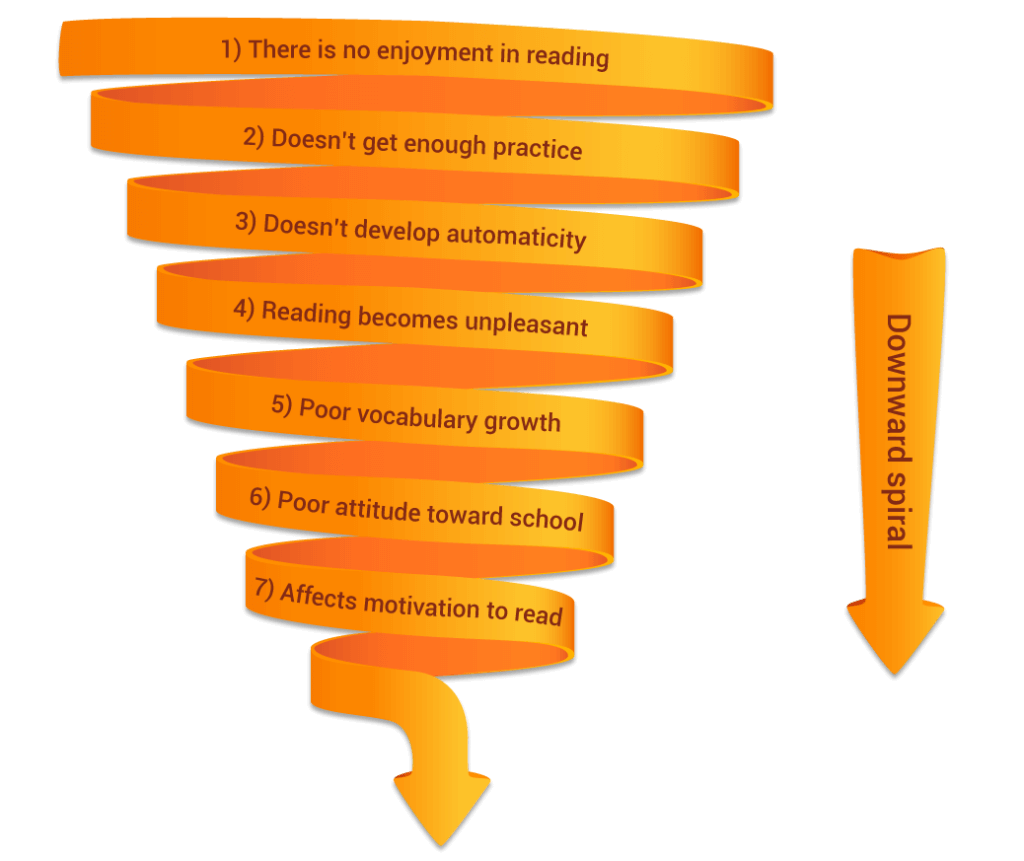
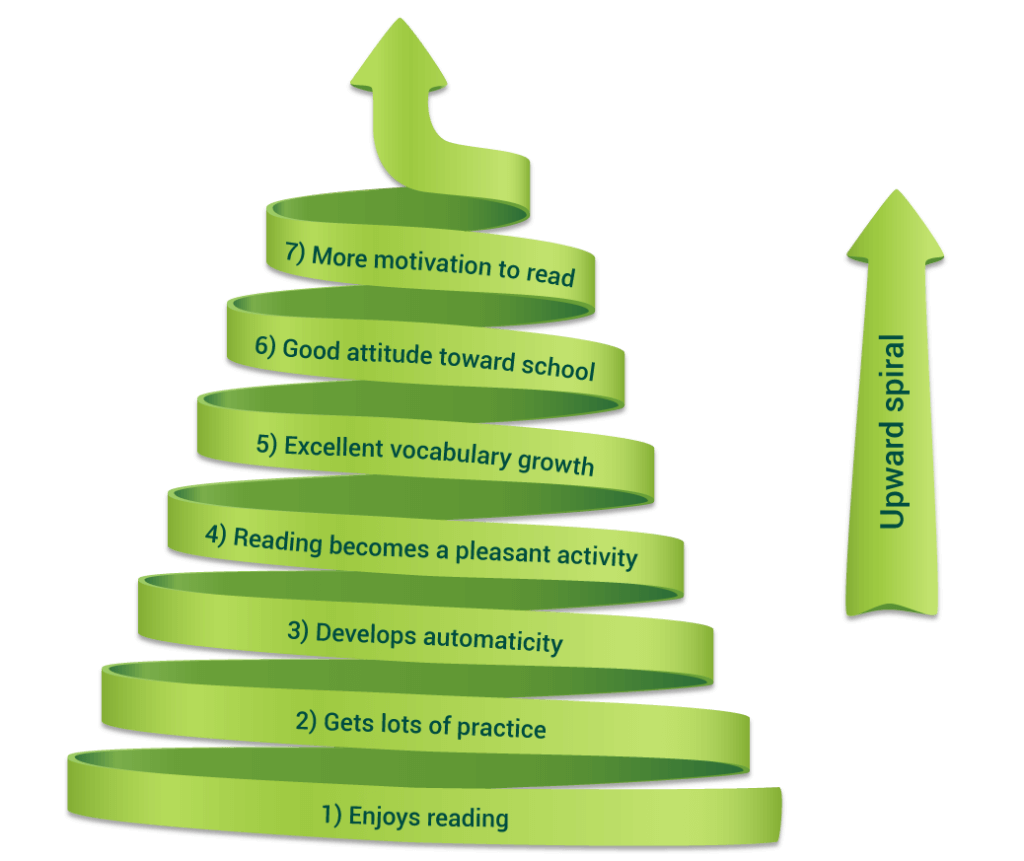
Reading doesn’t stand still.
Children move in one of two directions — an upward spiral or a downward one.
Early, aligned instruction is what puts them on the green path.
So Why Are We Still Catching Children After They Fall?
Because we already have the research, the instructional tools and a clear understanding of how children actually learn to read Kriah. We know how to teach these children.
Yet too often, we’re still trying to solve a complex literacy problem with misaligned tools — like asking a carpenter to build a bookshelf with a screwdriver while the drill sits unused. Or expacting a child to ride a bike with square wheels.
The issue isn’t effort. It’s aligning instruction with knowledge and research. It’s about using strategies that can make all the difference.

What Actually Works: Science Aligned with Tradition
Children succeed at Kriah when instruction is aligned with:
- Hebrew orthography and linguistics
- The Science of Hebrew Reading
- How children actually acquire literacy
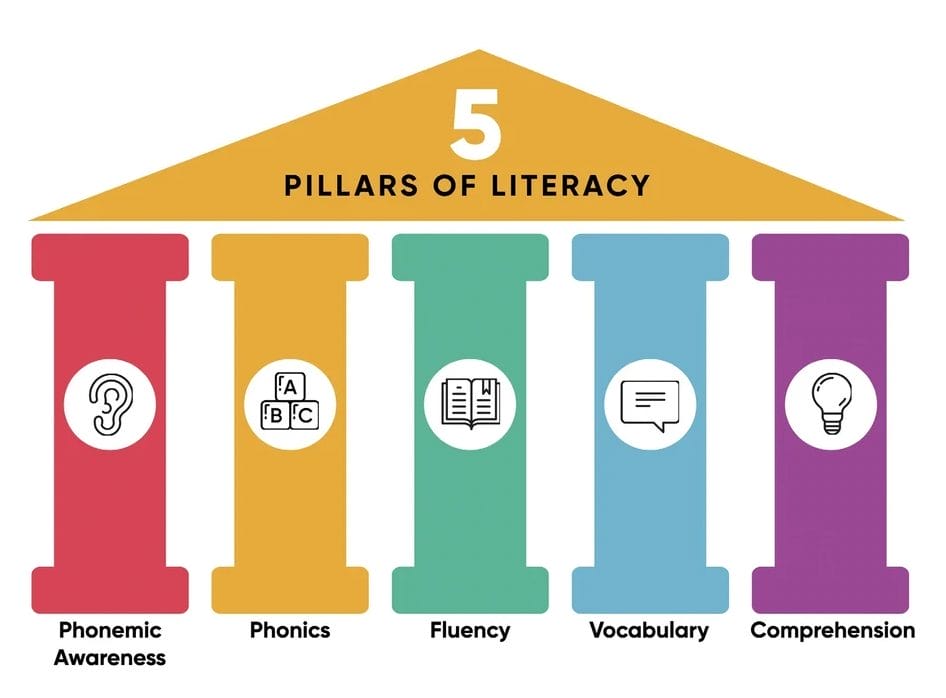
That means instruction grounded in five foundational pillars, taught together — not sequentially, not as add-ons:
- Phonemic Awareness
Helping children hear, identify, and manipulate Hebrew sounds clearly. - Structured Decoding
Systematic, cumulative instruction aligned with Hebrew’s vowel system and syllable structure. - Fluency
Accurate, automatic reading that frees cognitive space for meaning. - Vocabulary
Real words and real language that build understanding alongside decoding. - Comprehension
Thinking with text from the very beginning — not as an afterthought.
These are not layers we add later. They must stand together from the start.
This Is Where Responsibility Lives
I’m saying this because I’ve seen what’s possible.
I’ve seen young children — including those with significant dyslexia — learn to read Hebrew well and in good time when instruction is aligned and support comes early.
The greatest challenge isn’t the youngest learners. It’s the older students — whose attention has shifted, whose confidence has worn down, whose gaps are wide, and whose emotional load is heavy.
That’s why we must act when children are little.
The Question Isn’t Can We Prevent This — It’s How Will We?
What we do now determines whether, five years from now, another sixth grader is sitting across from me convinced he has failed — when in reality, we didn’t do everything that we can.
If you are an educator, administrator, or parent in a yeshivah or day school, this matters.
Not because blame belongs somewhere else.
But because power does.
The power to identify children earlier, intervene sooner and stop normalizing struggle that doesn’t have to exist. Early Kriah intervention isn’t a luxury. It’s a responsibility.
And if we truly believe every child can succeed —then we need to start acting like it now.



